Total Pageviews

Saturday, 14 June 2014

Richard Gidley 1898 - 1916


Richard Gidley was born on August 11, 1898 and was killed on July 1, 1916 at the age of 19. He was a Private in the Devonshire Regiment.
Richard's life seems to have been difficult from the start. It began at his birth in the Union Workhouse in Okehampton, Devon, where his unmarried mother, Bessie Gidley, a servant, had gone to give birth to him. It seems likely that he never lived with his mother, as in 1901 he was boarded out with a local family, and in 1911 he was still a boarder with them. He may never have lived as a family with his older sister, Bessie, or his younger brother Reginald, for Bessie Gidley, a kitchen maid at the White Hart Hotel, Okehampton, had three illegitimate children in total. She was the tenth of eleven children of George Gidley, a cooper of Throwleigh, Devon, and his second wife Ann Howard. They were from the Winkleigh Gidley branch. Bessie may have died in 1906 in the Plymouth area, and Richard's grandmother, Ann Gidley, was living in Torquay with her youngest son in 1901 and 1911.
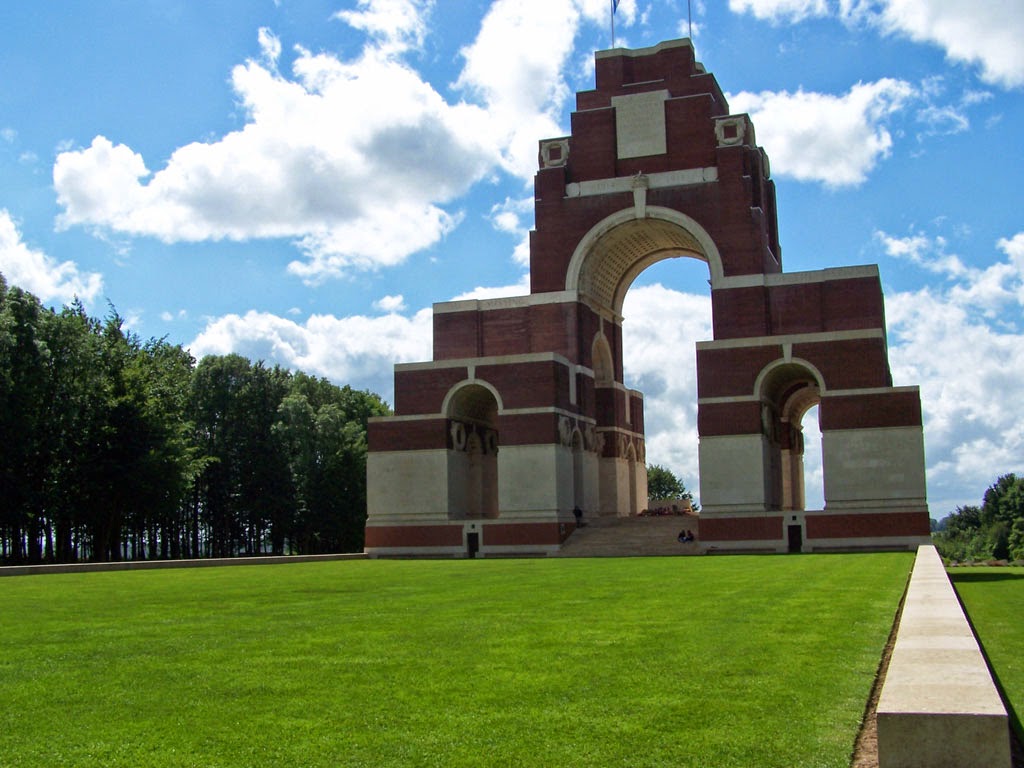
Richard seems to have joined up very early in the war. According to his Medal Rolls index card he arrived in France in May 1915. On July 1st 1916 he was "regarded dead", just one amongst the 57,000 casualties of the first day of the Battle of the Somme, for an advance of just one mile. He was awarded the 15 Star, the Victory and the British medals. He has no known grave, but is commemorated on the Thiepval memorial.

Geoffrey Damarel Gidley 1896 - 1916


Geoffrey Damarel Gidley died on May 30th 1916, aged 20. He was a Lance Corporal in the London Regiment (Queen Victoria's Rifles).
Geoffrey was born in 1896 in Ladbroke Grove, West London, and christened in Notting Hill. He was the fourth of five sons born to George Gidley and his wife Annie Maud, nee Sharp. There were also two daughters. Geoffrey's father George was, together with two of his brothers, a tailor in Shepherds Bush, West London. The family had originated in Chagford, Devon, and was part of the Winkleigh family of Gidleys.
Geoffrey was evidently a bright lad. He did not follow his father into the family tailoring business, but in 1911 was a clerk in a barrister's office, living at home in Shepherds Bush.
I came across Geoffrey's name in the latest edition of the school magazine for Latymer Upper School, Hammersmith, whilst looking for my uncle's obituary, for both he and my father later attended Latymer Upper (my husband did too, much later). All of them gained scholarships there. In the Latymerian magazine of January 2014 Geoffrey Damarel Gidley is described as falling at Gommecourt, on the first day of the Battle of the Somme, but I think that could be an error, as the first day of that battle is usually given a date of July 1st 1916, one month after Geoffrey died.
The names on Chiswick's war memorial have all been well researched and I am indebted to their website, Heroes of Chiswick, for the following information. The website quotes from The Chiswick Times of 9 June 1916:
"“Geoffrey Gidley was a very keen scout, and was the first member of a diocesan troop in London to gain the coveted “King’s Scout” badge. His early days as a scout were spent in St Stephen’s, Shepherd Bush Troop, from which he transferred to the 3rd Chiswick when coming to live in Chiswick.
A memorial service was held at St Michael’s, Sutton Court, on Wednesday evening, Holy Communion having been held in the early morning, when the 3rd Chiswick Troop and a contingent from St Stephen’s, Shepherd’s Bush, attended. The 1st, 2nd, 4th and 5th Chiswick Troops were represented by their patrol leaders. Mr T. Edwards Forster, J.P. (president of the Chiswick Scouts’ Association), District Scoutmaster and Commissioner H. S. Martin, and Scoutmasters H. Garlick, P.J. Lupton, F. Bransdon and L. Wilkinson were also present. The hymns “Nearer, my God, to thee” and “Fight the Good Fight” were sung, and the choir gave a really beautiful rendering of “O rest in the Lord”. The Rev L. McNeill Shelford conducted the service and gave an address. A colour party was furnished by the 3rd Chiswick Troop, consisting of Patrol Leader F. Robinson and Scouts Goffin and Simpson. At the conclusion of the service the Dead March in Saul was played, followed by the first verse of the National Anthem. Mr. and Mrs Gidley, who live in Burnaby Gardens, have reason to be proud of the record set up by their five sons. In addition to the one just lost, their married son, George William, has just joined as a private in the A.S.C. Julian Norman is a second-lieutenant in the R.F.A, and Robert Dudley is a cadet in the Queen Victoria Rifles. Their remaining son is a member of a volunteer corps in Burma. Mr and Mrs Gidley’s daughters have been married during the past twelve months in St Michael’s to Lance-corporal F. L. Edgar, Queen’s Westminsters, and Sergeant W.J.S Cook, London Scottish, both of whom are in France.”
The website also quotes from the parish magazine of St Michael's, Chiswick, as follows:
"Geoffrey Damarel Gidley enlisted with Queen Victoria’s Rifles (QVR) in September 1914 (The Chiswick Times edition of 18 September 1914 includes his name in its weekly update of local men who had joined up, under the heading “Chiswick’s Brave Sons”), and soon rose to the rank of Corporal. He entered France on 17 August 1915, but owing to his skill in training men was kept at base until about a week before his death. In fact he had only been in the firing line a few hours when a shell struck the rough dug-out in which he was, injuring him very severely. He was able to be moved to a clearing station, but died of his wounds the same day – 30 May 1916."
Geoffrey is buried in Doullens Communal Cemetery Extension no. 1, which was apparently used by several casualty clearing stations. He was awarded the 15 Star, the Victory and the British medals.
Sadly, Geoffrey's younger brother Robert Dudley Gidley was later killed in the war, and a third brother, Douglas Gidley died in 1920 in Burma. A cousin, Frederick William Gidley, was killed in 1917.

With thanks to the researchers of The Heroes of Chiswick website.
Thomas Edmund Gidley 1890 - 1915


Thomas Edmund Gidley was the first Gidley to die in the war and was a Private in the Manchester Regiment.
He was the the elder son of Arthur William Gidley and his first wife, Mary Jane, nee Cheetham. In 1911 Thomas was a packer of calico goods, working for a shipping house, and living at home in Salford, Lancs. His mother had died in 1902 and his father had married again. The stepmother, Annie, was blind by the 1911 census.
In 1912 Thomas married Mary Jane Lee in Salford and they had two children, Annie born in 1913, and a son called after his father, Thomas Edmund, who, tragically, was born only five weeks before his father's death. Thomas's widow married again in 1920.
Thomas Edmund must have joined up very early in the war. It seems that he was already serving in September 1914, departing for the Middle East. He was killed on May 18th 1915 at Gallipoli in the ill-fated Dardanelles Campaign, having landed probably only a couple of weeks earlier, to reinforce the British beachhead. His Medal Rolls index card records that he died of wounds. He was awarded the 15 Star, the Victory and the British medals. He is commemorated on the Helles Memorial in Turkey, pictured above.
The Dardanelles campaign against the Turks was intended to divert the Ottoman Empire from disrupting British oil supplies in the Middle East, from attacking the Russians in the Caucasus, and from cutting off access to India.

Gidleys who fell in the First World War 1914 - 1918

There were seventeen Gidleys who went off to fight and never returned, and it seems fitting to remember them in this centenary year, particularly if they don't have any descendants to remember them. Their ages ranged from 41 down to an unbelievably young 17, with an average age of 26. Some were volunteers from very early in the war, others were no doubt conscripted men, following the introduction of conscription in 1916. To meet the demands of the fighting, by May 1916 even married men between the ages of 19 and 40 were required to register for military service. I'm not sure who were the braver -those who volunteered right from the start, or those who went later, already knowing what horrors they were going to. The following blog posts commemorate those who didn't return, but there are several Gidleys who survived, but whose lives were changed for ever by the wounds they suffered.
The seventeen Gidleys who died were from three branches, the Gidleys of Dean Prior, of Winkleigh, and of Buckfastleigh. If we count the Dean Prior and Buckfastleigh men as one branch (they probably separated in the 17th century), then they make up by far the largest number of those killed - eleven. The remaining six were all from the Winkleigh branch. My own family, which originated in Spreyton, lost no-one in the war. My own grandfather was considered unfit to fight, following a childhood leg injury (he fell off a wall in Heavitree, Devon, scrumping for apples, and was later very glad he had, although the leg never healed properly and he always limped).
Tragically, there were three pairs of Gidley brothers killed, and of those pairs, one also lost a first cousin.
No Gidleys from the USA, Canada or Australia were killed, as far as I can ascertain, although many of the Americans fought. New Zealand is represented by one of the last to die, Robert Northleigh Gidley, an apiarist of some distinction.
The huge loss of life in the First World War is mirrored by Gidley casualties in both that war and the Second World War. There were far fewer in the Second World War. Between 1939 and 1945, although there were more casualties from Gidley families in the USA, and another from an Australian family, in Britain there were only two, and only one of those was due to the fighting. The other was a serviceman who was killed in the London Blitz. I shall commemorate them all at a later date.
If anyone reading this has any photos of these Gidleys I should of course be very pleased to add them to the blog posts, also if they have any more details of thier lives. I know only what is in the public domain. Family members may have more stories to tell of bravery. And I'm not a military historian. I have tried to put their deaths in context, but may well not have got it completely accurate.

Saturday, 10 May 2014

Gidley DNA test results

Bryan Gidley began the DNA testing some years ago and it has been slow to get off the ground. However, at a family funeral last year I managed to persuade a male Gidley cousin to take a yDNA test. I wanted to compare it with a test from the Gidleys of Winkleigh, to see if my theory that my Gidleys (descended from William and Wilmot Gidley of Spreyton) linked on to that tree. Pete Gidley of the Winkleigh branch kindly volunteered to be the Winkleigh branch's guinea pig.
It takes months for the findings to come through. And what a disaster - for me anyway. We are in no way linked to the Gidleys of Winkleigh in the male line, but form a completely separate line. Nor are either branch linked to Bryan's, the Gidleys of Cornwall, although Bryan's results are closer to mine.
So what does it all mean? I am absolutely no scientist and struggle with this. I have linked the two tests with Bryan's Gidley DNA project, and with the Devon DNA project. Both are run by Family Tree DNA. Debbie Kennett is the Group Administrator for the Devon Project and sent the following helpful e-mail:

"R1b [i.e.my own and Bryan's haplogroup] is the most common haplogroup in Europe, and indeed in the British Isles. About 70% of British men belong to haplogroup R1b. You can read more about the various European haplogroups on the Eupedia website:
http://www.eupedia.com/genetics
You can also read the relevant article on Wikipedia:
http://en.wikipedia.org/wiki/Haplogroup_R1b_(Y-DNA)."

Pete Gidley and all the others who can be traced back to Winkleigh are haplogroup I1.

I still find it difficult to believe that two families with the same name in the same small village (for one offshoot of the Winkleigh branch moved to Spreyton) are not connected in some way. If it's not in the male line, then I feel illegitimacy (for my lot) is likely to come into the picture. This might explain why there is no apparent baptismal record for William Gidley, my 3X great grandfather. I had begun to think that he must be William, son of John and Mary Gidley, who was baptised in South Tawton in 1776. The vicar kindly adds his date of birth three years earlier and adds "his father transported". This is very close to the date of a removal order for this family from South Tawton in 1772. William's date of birth, however, is a few years out from my William's age in 1841, 1851 and at his death in 1853, so I must reluctantly abandon William of South Tawton as my ancestor, I think. And start again!

Please volunteer to be tested if you are a male Gidley and can trace back to any of the branches not yet tested. And there are plenty of those - Buckfastleigh, Brixham, Kenton, Dean Prior, Chudleigh, Woodbury, Massachusetts, West Virginia, and so on. The results may not be what you expect, but there's no arguing with science and it's totally fascinating.

My next posts will be, in this 1914 centenary year, to commemorate all the Gidleys who fell in the First World War. If anyone has any photos of these men, I should be very pleased to post them here. There were 17 Gidley men killed, and they died between 1915 in the Gallipoli campaign, and October 1918 on the Western Front.


Sunday, 2 February 2014

Gidleys in British India

FindMyPast has recently published the Ecclesiastical Returns from the British India Office. I could have accessed these earlier by going to FamilySearch, a free site, but it took the recent national publicity to raise my awareness that these records were online. And there were some surprises. Gaps for marriages and deaths on the family trees I always assumed were due to emigration, but I always assumed to the dominions, like Canada, Australia and New Zealand. I hadn't given India much thought.
The first record chronologically is for Nathaniel Gidley, a private in the H? U? (can't decipher these initials with any certainty) 59th Regiment, who was buried at Bangalore July 9th 1834 aged 30. This makes him the son of Nathaniel Gidley and his wife Mary Westcott, of Whitestone, near Exeter, Devon.
The next burial record is for Jane Gidley, aged 23, in Bhusawul Cemetery, Bombay, on Aug 12th 1870. FamilySearch has another place of burial - Asserghur, Bombay - and her name is given there as Jane Morton Gidley. There is no indication as to whether she was single or married, and I don't know who she was. The cause of death was paralysis. Could this have been due to polio, I wonder?
In 1919 Alice Edith Frederica Gidley, wife of Lt. Col. Courtenay de Blois Gidley, Royal Field Artillery, of the Winkleigh branch, died at Simla aged 49. She left a son of only 9, Courtenay Terence Robert Gidley, who married in 1953 in Southern Rhodesia. Alice's widower, Courtenay de Blois Gidley, returned home to England much later and served in the Second World War as Col-Commandant of the Devon Army Cadet Force.
In 1925 Augustus George Gidley, 46, a driver on the Great Indian Peninsula Railway, was buried in Jhansi (new) Cemetery. He died of angina pectoris and was the father of 3 young children, all born in India. Augustus was the son of Charles Edwin Gidley, of Poplar in East London. Charles Edwin had 10 children by his first wife, Jessie Matilda, before abandoning her for his second wife, Eliza Anderson, who was his brother's stepdaughter, and had a second family of another 6 children. Most of the children of the first family didn't stay around for long after that. The G.I.P. railway apparently used British drivers with Indian firemen used as stokers. Augustus married Carmeline Cecilia Dennis in Byculla, Bombay, in 1914 and their family of three - Jessie Matilda (called after Augustus' mother), Sydney Herbert (called after Augustus' brother, a Royal Naval Petty Officer, drowned off the island of Coll whilst serving on HMS Jason in 1917) and George Augustus were all born in India. There remains a mystery as to was the Augustus Gidley, cited as a co-respdondent in the divorce case of Eustace Charles Palmer versus Carmeline Mary Palmer in India in 1916. The coincidence of the names - Carmeline and Augustus - is amazing but the surnames are different, as Augustus George Gidley the engine driver had married Carmeline Cecilia Dennis, a spinster, in 1914 in Byculla, Bombay. After Augustus' death his family presumably stayed on in India for some time, as daughter Jessie Matilda Gidley married in Bengal in 1932 aged only 14.
In 1932 Herman Gidley, R Battery, Royal Artillery, was buried in Bolarun, Hyderabad (Deccan), Trimulgherry. Aged only 24, he was the son of John Benjamin Gidley and his wife Mary Ann Jackson of Grimsby, Lincolnshire. He died of malaria.
Miriam Gidley married a Drum Major, Joseph Cashaldine, in 1875 in Ranikhet, Calcutta, Bengal. She had left her home town of Exeter in her early 20s and was the daughter of William Gidley and his second wife, Miriam Sanford. William belonged to the Winkleigh branch and was variously an ag lab, a butcher and a cattle dealer and had various convictions for petty theft.
Minnie Gladys Gidley, daughter of Henry Gidley, who married Edward Horace Turner at Colaba, Bombay in 1913 is a mystery. She was a spinster aged 21 at the time of her marriage.

Sunday, 5 January 2014

Charles Gidley and a minor misdemeanour

A short report of a court case, published on 6 January 1869 in the Morning Post. Charles Gidley, a labourer of Moyson, Devon, was prosecuted at Kingsbridge Town Hall, Devon, by the Board of Trade for the plunder of goods washed ashore from the ship, Gossamer, wrecked off nearby Prawle Point.
The coastguard had caught Charles Gidley in Hollacombe Lane with a bag on his back. The alert coastguard challenged Charles, only to be told the bag contained something he had bought, but on closer examination, it was found to be a pair of women's elastic shoes. Charles' counsel claimed at his trial that Charles was actually doing his duty and about to deliver the shoes to the Receiver or the nearest customs or coastguard officer, and was on his way straight to the watch house. In fact Charles should really be a plaintiff claiming salvage for saving goods from the wreck, and should not have been put on trial at all. Unfortunately, it was pointed out by prosecuting counsel that Charles had already passed the turning to the watch house when he was stopped.
The charge of plunder was dismissed, as there was no evidence that the goods had come from the wreck. Charles was given the benefit of the doubt, as he had "probably acted under a mistaken view of the law". The newspaper report says "there was no vindictive feeling by the Receiver of the Wreck". But to discourage others who might feel they could help themselves with impunity to goods washed ashore, Charles was ordered to pay a fine of 2s 6d, plus 10s (the estimated value of the boots), plus 15s costs.
The most likely Charles Gidley in the vicinty of Kingsbridge at that time is the son of Robert Gidley and Miriam Heath, born in Dean Prior in 1822. In 1861 he was living in Slew Lake Cottage, South Brent, and in 1871 he was an ag lab in Stokenham, quite close to the coast. He married Maria Ellis Lavers in 1846 and at his death in Kingsbridge registration district in 1892 was survived by just one of their 4 known children, Maria Gidley, who married Thomas Wills Stone in 1869, the same year as the court case. Did she wear the shoes at her wedding?